XML Sitemap? How to Create a Sitemap in WordPress?
Are you wondering what's an XML sitemap, and the way to feature it to your WordPress website?
An XML sitemap helps search engines easily fast navigate through your website content. It gives them a list of all your content in a machine-readable format.
Unlike a daily sitemap that's made for people, an XML sitemap isn't typically visible to your website visitors.
In this article, we'll explain what's an XML sitemap, and the way to simply create a sitemap in WordPress.

What is an XML Sitemap?
An XML sitemap may be a file that lists of all of your website content in an XML format, so search engines like Google can easily discover and index your content.
Back within the early 2000s, government websites wont to have a link on their main pages, titled “Sitemap”. This page usually contained an inventory of all the pages thereon website.
While some websites still have HTML sitemaps every day , overall the usage of sitemaps have evolved.
Today sitemaps are published in an XML format rather than HTML, and their audience is search engines and not people.
Basically, an XML sitemap may be a way for website owners to inform search engines about all the pages that exist on their website.
It also tells search engines which links on your website are more important than others, and the way frequently you update your website.
While XML sitemaps won't boost your program rankings, they permit search engines to raised crawl your website. this suggests they will find more content and begin showing it in search results thus leading to higher rankings sometimes.
Why you would like an XML Sitemap?
Sitemaps are extremely important from an enquiry engine optimization (SEO) point of view.
Simply adding a sitemap doesn't affect search rankings. However, if there's a page on your site that's not indexed, then sitemap provides you how to let search google engines realize that page.
Sitemaps are extremely useful for once you first start a blog or create a replacement website because most new websites don’t have any backlinks. This makes it harder for search engines to get all of their content.
This is why search google engines like Google and Bing allow new website owners to submit a sitemap in their webmaster tools. this enables their program bots to simply discover and index your content (more on this later).
Sitemaps are equally as important for established popular websites also . they permit you to spotlight which a part of your websites are more important, which parts are more frequently updated, etc, so search engines can visit and index your content accordingly.
This helps improve the general visibility of your website in program rankings.
How to create a Sitemap in WordPress?
There are several ways to make an XML sitemap in WordPress. we'll show you two popular methods to make an XML sitemap in WordPress, and you'll choose one that works best for you.
Method 1. Creating ane XML Sitemap in WordPress using Yoast SEO
The easiest thanks to create an XML sitemap in WordPress is by using the Yoast SEO plugin.
It is the simplest WordPress SEO plugin on the market offering you a comprehensive set of tools to optimize your blog posts for SEO.
First, you would like to put in and activate the Yoast SEO plugin. For more details, see our step by step guide the way to install a WordPress plugin.
pon activation, attend SEO » General page and switch to the ‘Features’ tab. From here, you would like to scroll right down to the ‘XML Sitemap’ option and confirm that it's turned on.
Next, click on the save changes button to store your changes.
To verify that Yoast SEO has created an XML Sitemap, you can click on the question mark icon next to the XML Sitemap option on the page.
After that, click on the ‘See the XML Sitemap’ link to look at your live XML sitemap generated by Yoast SEO.
You can also find your XML sitemap by simply adding sitemap_index.xml at the top of your website address. For example:
https://www.example.com/sitemap_index.xml
Yoast SEO creates multiple sitemaps for various sorts of content. By default, it'll generate sitemaps for posts, pages, author, and categories.
If you run a web store using WooCommerce, then it'll also generate a sitemap for your products.
However, when it involves submitting the sitemap to look engines, you’ll only got to submit the most sitemap index file. We’ll show you how to do that later in this article.
Method 2. Creating ane XML Sitemap in WordPress using Google XML Sitemaps Plugin
This method is suggested for users who don’t want to use Yoast SEO’s XML Sitemaps feature.
First, thing you would like to try to to is install and activate the Google XML Sitemaps plugin. For more details, see our step by step guide the way to install a WordPress plugin.
Upon activation, the plugin auto generates an XML Sitemap for your website. You can view it by simply add sitemap.xml to your website’s address. For example:
https://www.example.com/sitemap.xml
The plugin works outof the box for most blogs and business websites. However, you continue to got to review plugin settings to form sure that you simply aren't missing anything.
At the top, the plugin will offer you status information. It will notify you if the plugin is unable to ping any program .
You can review the essential options where you'll disable the plugin from notifying search engines, increase PHP memory limit, and more. The default settings would work for many WordPress hosting environments.
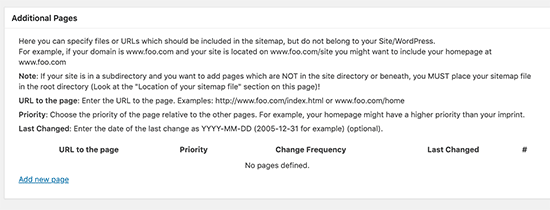
Next, you’ll see the additional pages section. From here you'll manually add pages to your XML sitemap. This comes in handy if your website has static xml pages not created by the WordPress CMS.
After that, you'll adjust the frequency and priority of your sitemap contents. Changing these values are considered as a touch by search engines, and that they may prefer to follow or ignore these tags supported their criteria.
The next two sections of the plugin’s settings page allow you to incorporate and exclude content from your WordPress sitemap. For example, if you run an eCommerce store, then you'd want to incorporate the ‘Products’ content type to your sitemap.
After that, you'll adjust the frequency and priority of your sitemap contents. Changing these values are considered as a touch by search engines, and that they may prefer to follow or ignore these tags supported their criteria.
Finally, don’t forget to click on the ‘Update Options’ button to save lots of your changes.
How to Tell Search Engines About Sitemaps?
Search engines are quite smart find a sitemap. Whenever you publish new content, a ping is shipped to Google and Bing to tell them about changes in your sitemap.
However, we recommend that you simply submit the sitemap manually to make sure that search engines can find it.
Submitting Your XML Sitemap to Google
Google Search Console is a free tool offered by Google to help website owners monitor and maintain their site’s presence in Google search results.
Adding your sitemap to Google Search Console helps it quickly discover your content albeit your website is fresh .
First, you would like to go to the Google Search Console website and check in for an account.
After that, you'll be asked to pick a property type. You can choose a website or a URL prefix. We recommend choosing URL prefix because it is simpler to setup.

nter your website’s URL and then click on the continue button.
Next, you'll be asked to verify ownership of the web site . You will see multiple methods to try to to that, we recommend using the HTML tag method.

Simply copy the code on the screen then attend the admin area of your WordPress website.
From here, you would like to put in and activate the Insert Headers and Footers plugin. For more details, see our step by step guide the way to install a WordPress plugin.
Upon activation, you would likes to goo to Settings » Insert Headers and Footers page and add the codes you copied earlier within the ‘Scripts in Header’ box.
Don’t forget to click on the save switch to store your changes.
Now, switch back to the Google Search Console tab and click on on the ‘Verify’ button.
Google will check for verification code on your site and then add it to your Google Search Console account.
Note: if the verification is unsuccessful, then please make sure to clear your cache and then try again.
Now that you simply have added your website, let’s add your XML sitemap also .
From your account dashboard, you would like to click on the Sitemaps from the left column.

After that, you would like to feature the last a part of your sitemap URL under the ‘Add new sitemap’ section and click on the Submit button.
Google and bine will now add your sitemap URL to your Google Search Console.
It will take Google a while to crawl your website. After a short time , you'd be ready to see basic sitemap stats.
This information includes the amount of links Google found in your sitemap, what percentage of them got indexed, a ratio of images to sites , and more.
Submitting Your XML Sitemap to Bing
Similar to Google Search Console, Bing also offers Bing Webmaster Tools to assist website owners monitor their website within the Bing program .
To add your sitemap to Bing, you would like to go to the Bing Webmaster Tools website and check in for an account. Once you've got signed up, you'll add your website under the ‘Add new site’ section.
On the next screen, you will be asked to enter your website details including the sitemap URL.
Click on the Submit button to continue.
Bing will now ask you to verify the ownership of your website and can show you many methods to try to to that.
We recommend using the Meta tag method. Simply copy the meta punch line from the page and paste it on a blank document on your computer.
Now attend your WordPress website and install and activate the Insert Headers and Footers plugin to your website.
Don’t forget to click on the Save swich to store your changes.
How to Utilize XML Sitemaps for Your Website?
Now that you simply have submitted the XML sitemap to Google, let’s take a glance at the way to utilize it for your website.
First, you would like to stay in mind that the XML sitemap doesn't improve your search rankings. However, it does help search google engines find content, adjust crawl rate, and improve your website’s visibility in search engines.
You need to stay an eye fixed on your sitemap stats in Google Search Console. It can show you crawl errors and therefore the pages excluded from search coverage.
Below the charts, you can click on the tables to view actual URLs excluded or not indexed by Google.
Normally, Google may plan to skip duplicate content, pages with no content or little or no content, and pages excluded by your website’s robots.txt file or meta tags.
However, if you've got a strangely high number of excluded pages, then you'll want to see your SEO plugin settings to form sure that you simply aren't blocking any content.
We hope this text helped answer all of your questions on XML sitemaps and the way to make an XML sitemap for your WordPress site. You may also want to ascertain our guide the way to quickly increase your website traffic with these actionable tips.
page link - https://chandancomputar.blogspot.com/2020/07/sitemap-couldnt-fetch-wordpress-website.html